
Why Collaboration Changes Everything for Kids with Cancer
June 26, 2026 · 5 min read
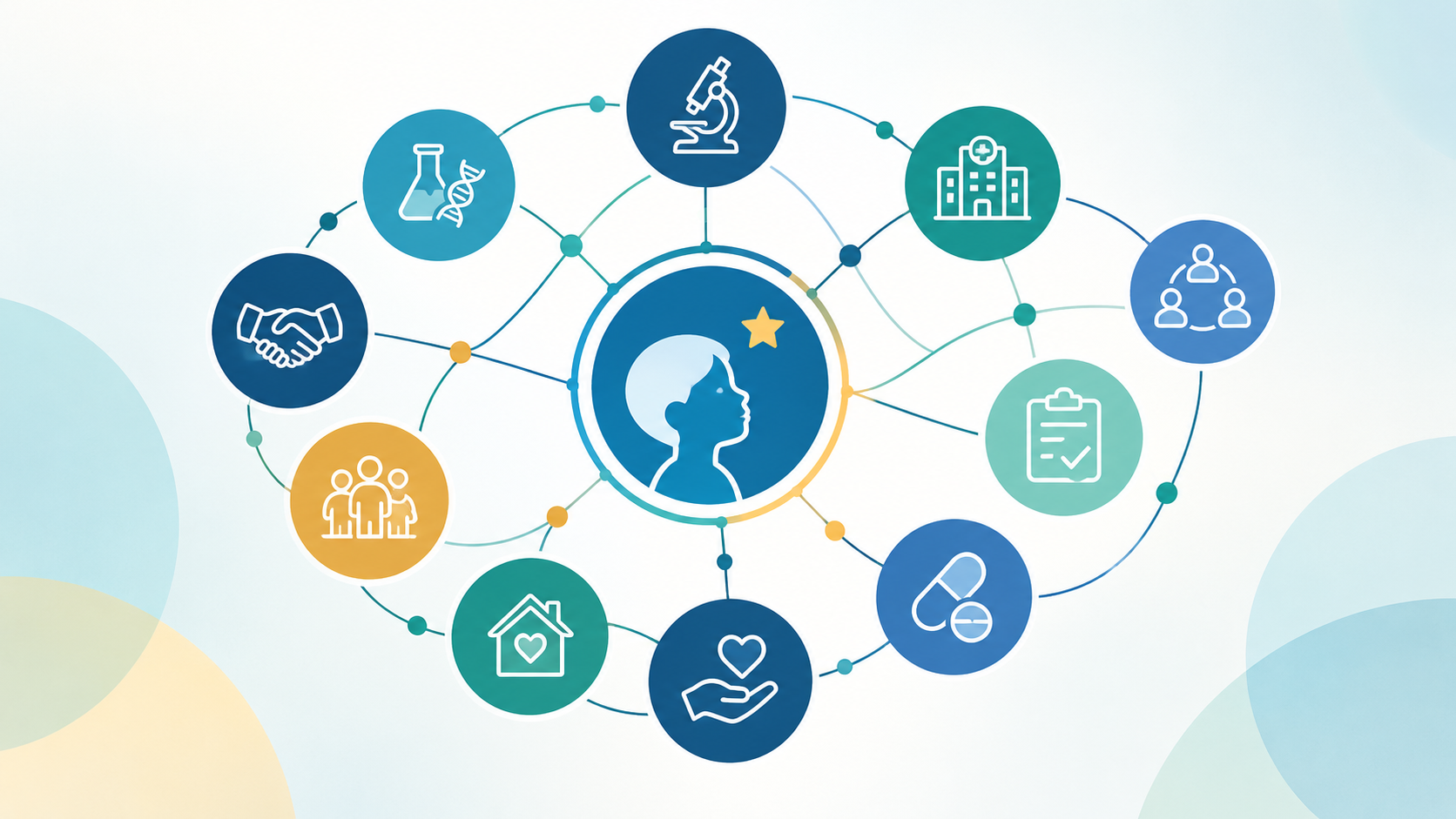
Childhood cancer is too complex for any one organization to solve alone.
Every breakthrough depends on a network of collaborators: researchers sharing data, hospitals coordinating clinical trials, nonprofit organizations pooling resources, and families helping guide the work toward what matters most.
That is why collaboration is a core part of how The Morgan Adams Foundation advances research and supports children with cancer.
Collaboration accelerates progress.
Why Collaboration Matters in Pediatric Cancer
When organizations combine expertise and funding, researchers can tackle larger questions, clinical trials can enroll patients more efficiently, and families can access broader support networks. It also reduces duplication and allows resources to be directed where they can have the greatest impact.
For rare diseases like pediatric cancers, collaboration is especially important. No single hospital or foundation sees enough patients to answer every research question alone. By working together through research consortia and foundation partnerships, discoveries can move more quickly from the laboratory to the clinic.
Researchers often need to combine expertise, patient populations, biological samples, and funding resources across multiple institutions to answer important questions. The same is true for clinical trials. New therapies can only move forward when hospitals, physicians, researchers, regulators, industry partners, and nonprofits work together.
And for families navigating treatment, support often requires a network of organizations addressing different needs, from financial assistance to housing to emotional support.
Expanding Research Through Co-Funded Grants
In addition to funding individual projects, The Morgan Adams Foundation participates in collaborative foundation cohorts and initiatives that bring multiple organizations together around shared goals.
When foundations align around a shared goal, they can support larger, more ambitious projects than any one organization could fund independently.
Co-funding also allows researchers to pursue innovative ideas that may be too early for federal funding but have the potential to transform treatment in the future.
By partnering with other organizations, The Morgan Adams Foundation is helping bring additional resources to promising projects while ensuring that donor dollars have the greatest possible impact.
Every partnership creates new opportunities to move discoveries forward faster.
- The CURE Collaborative (Charities United for Research Excellence) was formed in 2026 as a group of four like-minded nonprofit funders collaborating to fund bold high-risk, high-reward projects that can rapidly advance understanding and treatment of medulloblastoma. The group plans to use this model to expand its reach to include other tumor types.
- Founded in 2022, DDRFA (DIPG DMG Research Funding Alliance) is composed of more than 30 separate nonprofits and funds that have come together to grant nearly $4 million to 23 investigators at 19 institutions exclusively for DMG/DIPG research, data collection, and trials. The Morgan Adams Foundation has proudly co-funded grants each year.
Accelerating New Treatments Through Co-Funded Clinical Trials
Research discoveries only help children if they ultimately reach patients.
That is why clinical trials are so important.
Launching a pediatric cancer clinical trial requires significant investment, infrastructure, and coordination across institutions. By partnering with other nonprofit organizations, research networks, and clinical trial consortia, The Morgan Adams Foundation helps support studies that evaluate promising new therapies and bring cutting-edge treatments closer to children who need them.
These partnerships are especially important as the pediatric cancer community faces new challenges, including the closure of longstanding clinical trial infrastructure and increasing competition for research funding. Working together helps ensure that momentum continues and that promising therapies do not remain stuck in the laboratory.
- CONNECT (COllaborative Network for NEuro-oncology Clinical Trials) is a network of 24 international pediatric cancer centers that conducts studies to demonstrate safety and feasibility of novel agents for children with high-risk brain tumors. CONNECT is funded through the support of over a dozen nonprofit organizations, private donations, and corporate grants. The Morgan Adams Foundation is helping fund two trials for the treatment of Pediatric Adamantinomatous Craniopharyngioma through the group.
- The Morgan Adams Foundation and The Robert Connor Dawes Foundation understand that kids can’t wait for better treatments for devastating diseases like ependymoma brain tumors and are collaboratively funding an upcoming clinical trial for the disease through the Children’s Oncology Group.
- The Morgan Adams Foundation is proud to partner with the Osteosarcoma Institute to fund a correlative study at Dana-Farber Cancer institute alongside a Phase 2 clinical trial in Spain for kids with advanced high-grade osteosarcoma.

Supporting Families Together
Collaboration extends beyond research and treatment.
Families facing pediatric cancer often encounter challenges that no medical team can solve alone. Transportation, housing, lost income, childcare, meals, and emotional support all affect a family’s ability to navigate treatment successfully.
That is why The Morgan Adams Foundation partners with other organizations to provide financial assistance and supportive services to families in crisis.
Rather than duplicating efforts, these partnerships allow organizations to combine strengths, identify gaps, and ensure families receive the help they need when they need it most.
The result is a stronger safety net for children and their caregivers.
- My DIPG Navigator is funded through Luke’s Posse, a Tribute Fund of The Morgan Adams Foundation. This free service is staffed with experienced oncology nurses and social workers who help patients and their families understand diagnosis and treatment options, provide connections to DIPG and DMG medical experts and support resources, and serve as a sounding board throughout the treatment journey.
- The DIPG DMG National Brain Tumor Board is a free, confidential service that offers treating providers of DMG and DIPG patient centered advice on innovative treatment options and clinical trials. The Board includes pediatric neurooncologists, neuroradiologists, and neurosurgeons from leading institutions around the US and is supported by 30+ nonprofits.
- The Colorado Childhood Cancer Awareness License Plate creates awareness for childhood cancer and shows kids, teens, and young adults battling cancer that they are not alone. Proceeds from the license plate provide financial assistance to families through The Morgan Adams Foundation and Cops Fighting Cancer.

Why This Matters
Every major advance in pediatric cancer has been built on collaboration.
Researchers share data. Hospitals share patients through clinical trials. Foundations share resources. Families share their experiences and participate in research that helps future children.
Together, these partnerships create something far greater than any single organization could achieve alone.
At The Morgan Adams Foundation, we are proud to work alongside fellow nonprofits, research institutions, hospitals, clinical trial groups, and family support organizations to accelerate progress from every angle.
Because when organizations collaborate, discoveries happen faster, clinical trials reach more children, and families receive the support they deserve.
And that means more hope for every child facing cancer.
No single organization can meet every one of those needs alone.
But together, we can do more.
Through collaboration, we are building a future where every child has access to better treatments, stronger support systems, and greater hope for what comes next.
If you would like to support advancing research, expanding clinical trials and providing critical support to families facing childhood cancer, we invite you to make a gift today.
Your generosity helps unite researchers, clinicians, nonprofits, and families around a shared mission: ending pediatric cancer and improving the lives of every child affected by it.