The Invisible Engine Behind Every Discovery
July 31, 2026 · 5 min read
The Science Behind the Science
The Most Important Research You Never See
When people think about pediatric cancer research, they often picture scientists in white lab coats discovering a new treatment or physicians enrolling children in clinical trials.
What they don’t picture is the enormous amount of data sitting behind every breakthrough.
Today’s pediatric cancer research generates more information than ever before. Researchers can now study individual tumor cells, map how cancer behaves within the body, identify subtle genetic changes that drive treatment resistance, and even predict which therapies may work best for a specific child. Thanks to bioinformatics this data can be mined more efficiently allowing pediatric cancer research to move at an exciting pace.
What Is Bioinformatics?
Bioinformatics combines biology, computer science, mathematics, and data analysis to transform millions of pieces of genetic and molecular information into discoveries that can improve outcomes for children with cancer.
Imagine receiving one million pieces of a puzzle with no picture on the box.
Some pieces belong to a child’s tumor cells. Others represent healthy cells, immune cells, or molecular signals that influence how a cancer grows and responds to treatment.
Bioinformatics allows researchers to put those pieces together and identify the patterns hidden within them.
Researchers use bioinformatics to answer questions like:
- Why did this child’s tumor return after treatment?
- Why do two children with the same diagnosis respond differently to therapy?
- Which genetic changes are driving cancer growth?
- Which existing drugs might be effective against a specific tumor?
- How can we identify new treatment targets more quickly?
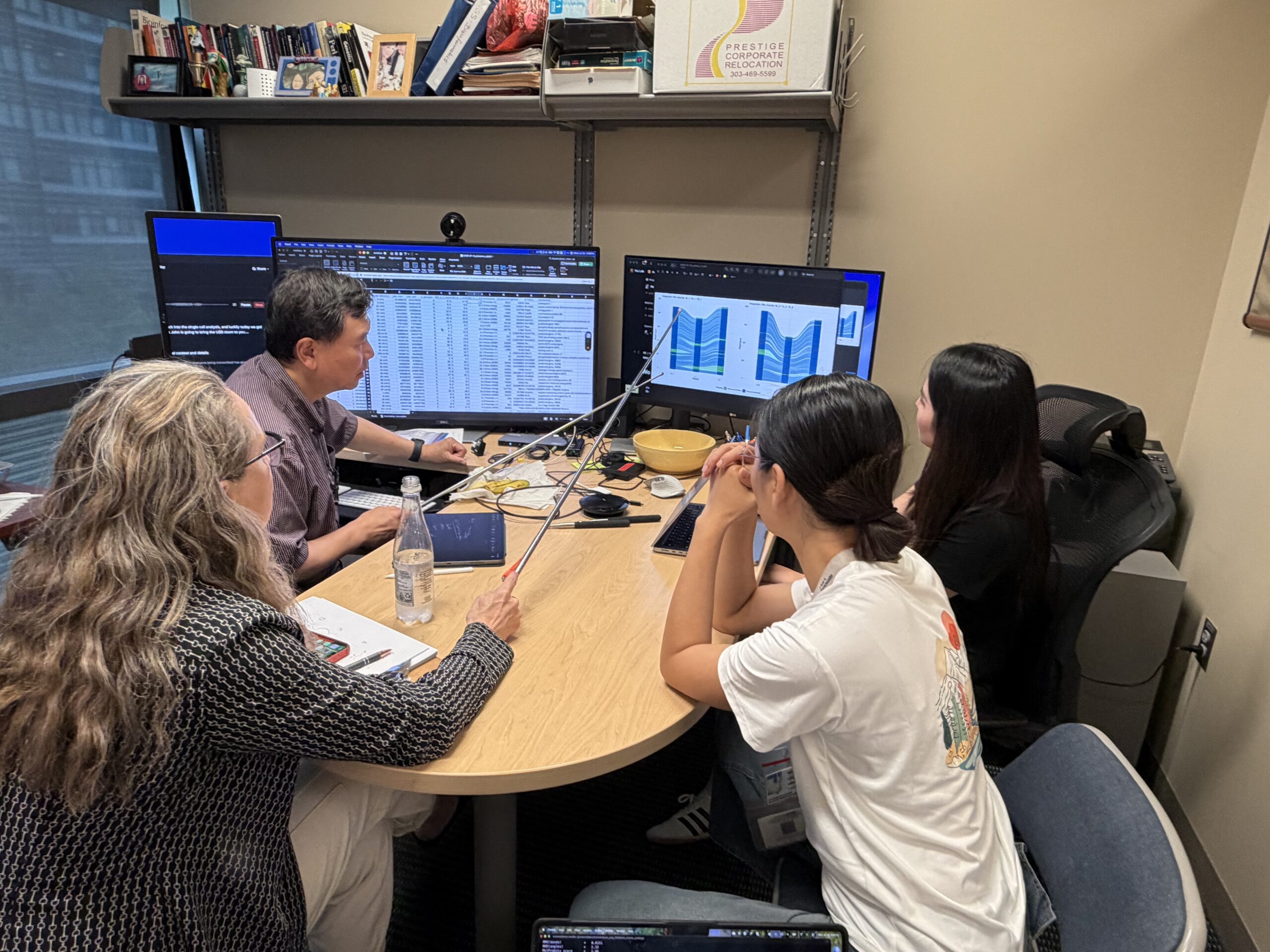
Modern pediatric cancer research simply produces too much data for scientists to analyze by hand. Bioinformatics provides the computational tools and expertise needed to turn information into insight. This team helps research scientists find the needle in a haystack that can lead to better outcomes for our kids.
Why It Matters More Than Ever
The technologies used in pediatric cancer research have evolved dramatically over the last decade.
Today, researchers can:
- Sequence the genetic material of individual cancer cells
- Study how tumors interact with their surrounding environment
- Track how cancers change over time
- Build detailed molecular maps of rare pediatric tumors
- Develop AI-assisted tools that help predict treatment response
Each of these technologies produces enormous datasets that require sophisticated computational analysis. Today, nearly every cutting-edge technology funded by The Morgan Adams Foundation, from single-cell sequencing and liquid biopsies to organoid models and precision medicine studies, depends on bioinformatics to transform raw data into meaningful discoveries.
Building the Foundation for Future Discoveries
At The Morgan Adams Foundation, bioinformatics is not a standalone research project. It is a shared resource that supports dozens of pediatric cancer studies simultaneously. We support the Pediatric Hematology Oncology and Bone Marrow Transplant bioinformatics core at The University of Colorado, a team of computational biologists who support our funded researchers.
Expanding on prior investment by the WillStrong Leukemia Program and with the continued support of MAF donors, researchers have built a modern bioinformatics program that is making pediatric cancer research faster, more collaborative, and more impactful.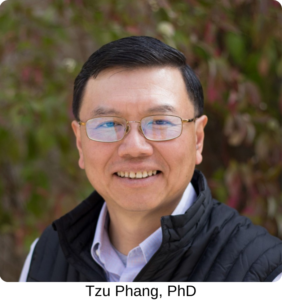
Dr. Tzu Phang, Associate Professor of Bioinformatics at the University of Colorado, Anschutz Medical Campus, explains:
“The Morgan Adams Foundation’s support has already had a major impact on building a modern, high-functioning bioinformatics program for pediatric cancer research.”
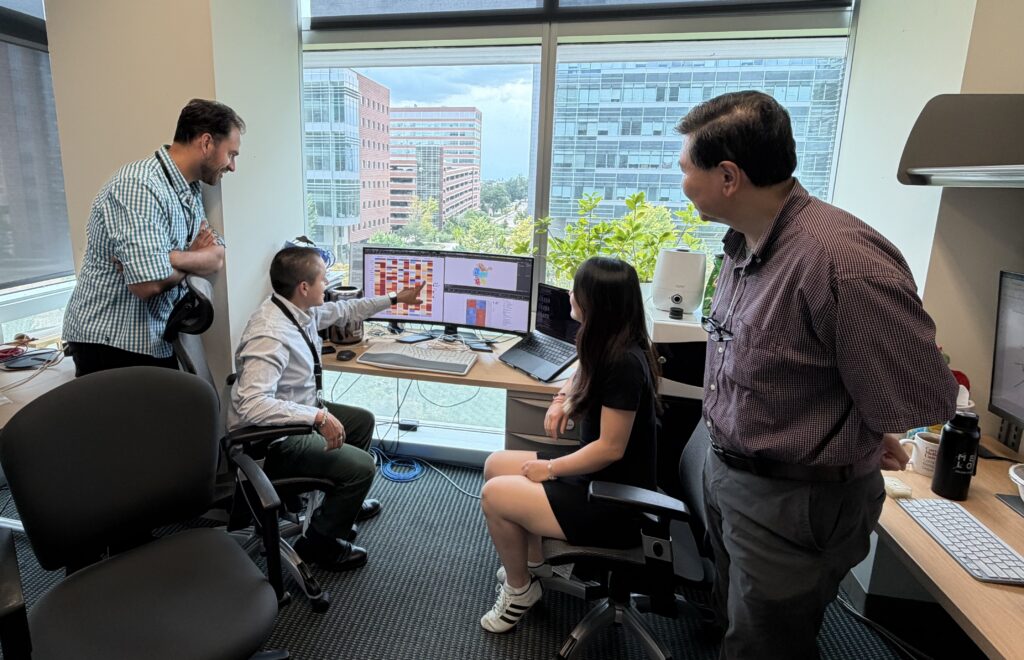
That support has helped establish sophisticated project management and communication systems that keep researchers aligned, expand secure computing infrastructure capable of handling massive genomic datasets, integrate artificial intelligence tools into research workflows, and train scientists to become “citizen analysts” who can more effectively interpret their own data. These investments may not be visible in a laboratory’s photograph, but they dramatically increase the speed, quality, and efficiency of pediatric cancer research.
Empowering Researchers to Ask Bigger Questions
Bioinformatics doesn’t just support research. It expands what researchers can discover.
 Dr. Bethany Veo, Assistant Research Professor University of Colorado Anschutz Medical Campus, studies why pediatric brain tumors develop, recur after treatment, and respond differently to therapies. Answering those questions requires analyzing enormous amounts of genetic and molecular data generated from patient tumor samples.
“Our goals, to identify new therapeutic approaches and ultimately the cause of disease, require technological tools that produce increasingly larger datasets and complex bioinformatic analyses to collate and interpret,” Dr. Veo explains.
The bioinformatics team has been instrumental in advancing Dr. Veo’s work, helping identify critical genetic regulatory regions involved in medulloblastoma recurrence and developing machine learning models that may eventually help predict when tumors are likely to return.
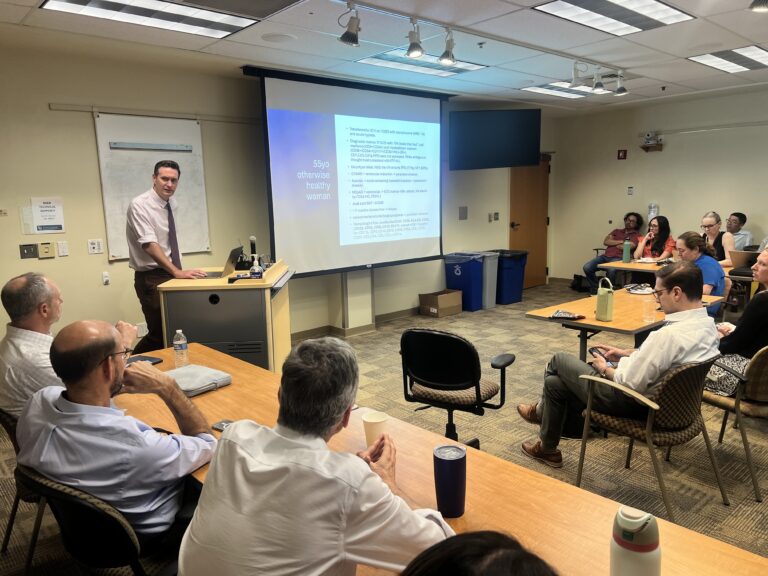
Beyond analyzing data, the team is also teaching researchers how to use programming tools like R, Python, and artificial intelligence platforms to better understand and interpret their own findings. Through monthly working groups, coding workshops, and hands-on training, scientists are gaining new skills that make them more effective investigators. Every researcher empowered by bioinformatics becomes better equipped to translate data into discoveries for children with cancer.
Multiplying the Impact of Every Discovery
One of the most exciting aspects of bioinformatics is that its impact compounds over time. When researchers can analyze data faster and more accurately, discoveries move forward more quickly. Preliminary findings become stronger grant applications. New insights lead to publications that advance the entire field of pediatric oncology.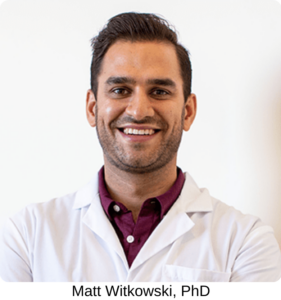
Dr. Matt Witkowski, Assistant Professor, Pediatrics-Heme/Onc and Bone Marrow Transplantation University of Colorado, Anschutz Medical Campus, has seen firsthand how this investment is accelerating discoveries across pediatric cancer research.
“Support from the WillStrong Leukemia Program and The Morgan Adams Foundation has allowed us to build a bioinformatics team that has generated the data behind multiple NIH grants, high-impact scientific publications, and collaborative efforts that are advancing pediatric cancer research.”
The bioinformatics program supported by MAF has already contributed to multiple NIH-funded research grants and publications in leading scientific journals, including The New England Journal of Medicine, Blood, Leukemia, and Neuro-Oncology.
In other words, one investment in bioinformatics creates opportunities for many more discoveries to follow.
Looking Ahead
The future of pediatric cancer research will rely even more heavily on bioinformatics.
Continued support will allow researchers to streamline complex analyses, and develop next-generation AI-driven tools. It will also help modernize pediatric cancer datasets and biobank resources, making them more accessible and useful for researchers around the world. As Dr. Phang explains, these improvements compound over time, producing faster, higher-confidence results, stronger collaborations, and more impactful discoveries for children with cancer.
Bioinformatics is becoming one of the most powerful drivers of progress in pediatric cancer research. It is the science behind the science. Every pediatric cancer breakthrough begins with a question. Because of supporters like you, bioinformatics is helping researchers find the answers.
If you would like to make a gift to support the critical research infrastructure powering tomorrow’s pediatric cancer breakthroughs, we invite you to make a gift today click here.
Together, we are helping researchers uncover the answers hidden within every child’s cancer and bringing us closer to a future where every child has access to more effective and less toxic treatments.