
How understanding the roots of childhood cancer can help us find an end to it
Two children can be diagnosed with the same type of cancer, receive similar treatments, and have completely different results. Why does one tumor respond well while another becomes aggressive or returns?
Answering that question requires looking deep into the biology of the tumor itself. Your generosity is helping to fund research that explores where tumors originate, how they evolve over time, and what biological processes may be driving their growth.
This work will help our researchers identify new treatment targets and develop therapies that are more precise, more effective, and less toxic for children.
Tumor Biology Studies
Why do the same childhood cancers have such different outcomes in different kids?
Even when tumors appear similar under a microscope, they may be driven by very different biological forces, leading to very different results.
Some cancers develop aggressive behaviors because of specific genetic mutations. Others are shaped by the surrounding tumor environment, developmental signals in the growing brain, or molecular processes that influence how genes are expressed.
Research in tumor biology helps scientists:
These discoveries are critical because they often uncover entirely new treatment strategies.
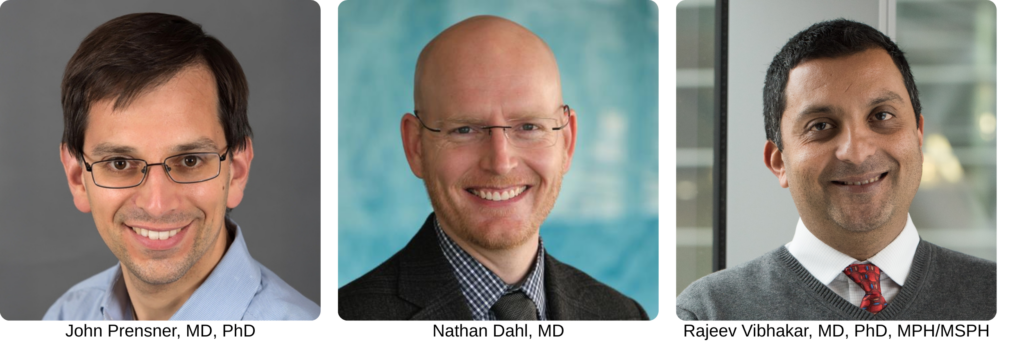
Because of you, The Morgan Adams Foundation is funding several projects designed to better understand the biology behind some of the most challenging pediatric brain tumors:
Why these types of studies and your support of them matters
Understanding the biology of childhood cancers is one of the most powerful ways to improve treatment options and outcomes.
When researchers uncover what drives a tumor’s growth, they can design therapies that target those precise factors directly, instead of relying only on treatments like chemotherapy – which unfortunately can affect both cancerous cells as well as healthy cells alike. For a growing child, this kind of treatment can be harsh and often, life altering.
Because of supporters like you, researchers are exploring the fundamental biology of pediatric cancers and translating those discoveries into better treatments for children who urgently need them.
Learning more about the lives you’re supporting
The kids behind the research
Behind every discovery are children and families waiting for better answers. Getting to know these kids only emphasizes why research like this is so important…helping to better understand how to treat the individual child and not treat the general cancer. All in hopes that one day all kids with all types and subtypes of all cancers will have equal options for cures.
Medulloblastoma is one of the most common pediatric brain tumors and it’s also a prime example of tumors that behave very differently in different children. Whereas some kids respond well to treatment, others do not…or eventually face recurrence or long-term complications. Understanding why is exactly what this type of research that you’re helping to fund aims to uncover.
Meet two of our incredibly brave Ambassadors diagnosed with Medulloblastoma whose journeys took very different paths:
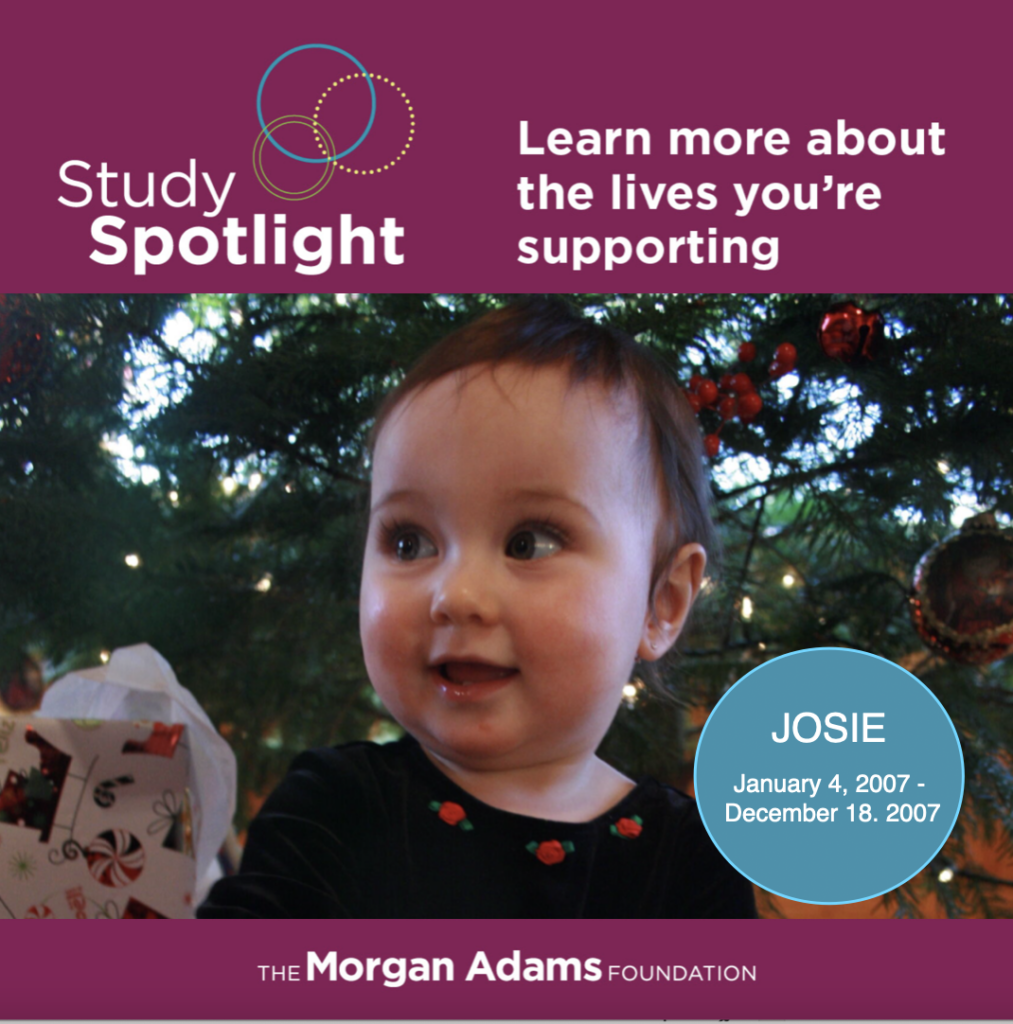
Meet Josie
January 4, 2007 – December 18, 2007
Josie was a bright, fun, and happy little girl who could light up a room and command attention with just her smile and her laugh. Her eyes would captivate you as you gazed in amusement about the wonder and excitement only a child can bring.
She was born perfectly, as every parent hopes. She had only minor colds and earaches throughout the year. One day, when she was not herself, her mom took her to the emergency room because she was not breathing normally. But by the time they got there Josie had stopped breathing. She was resuscitated and stabilized, but after many tests, a CAT scan revealed a medulloblastoma brain tumor. It had become necrotic and swelled with blood, which caused her to stop breathing so abruptly.
Because things happened so fast, there were no signs and symptoms. It was deemed inoperable because she had had such neurological devastation from the resuscitation period. She could not sustain life on her own at this point. And so, Josie’s parents let go of their little angel.
From Josie’s parents, “It is an honor and a privilege to be involved with MAF, for their work is a labor of love and generosity. Thank you.”
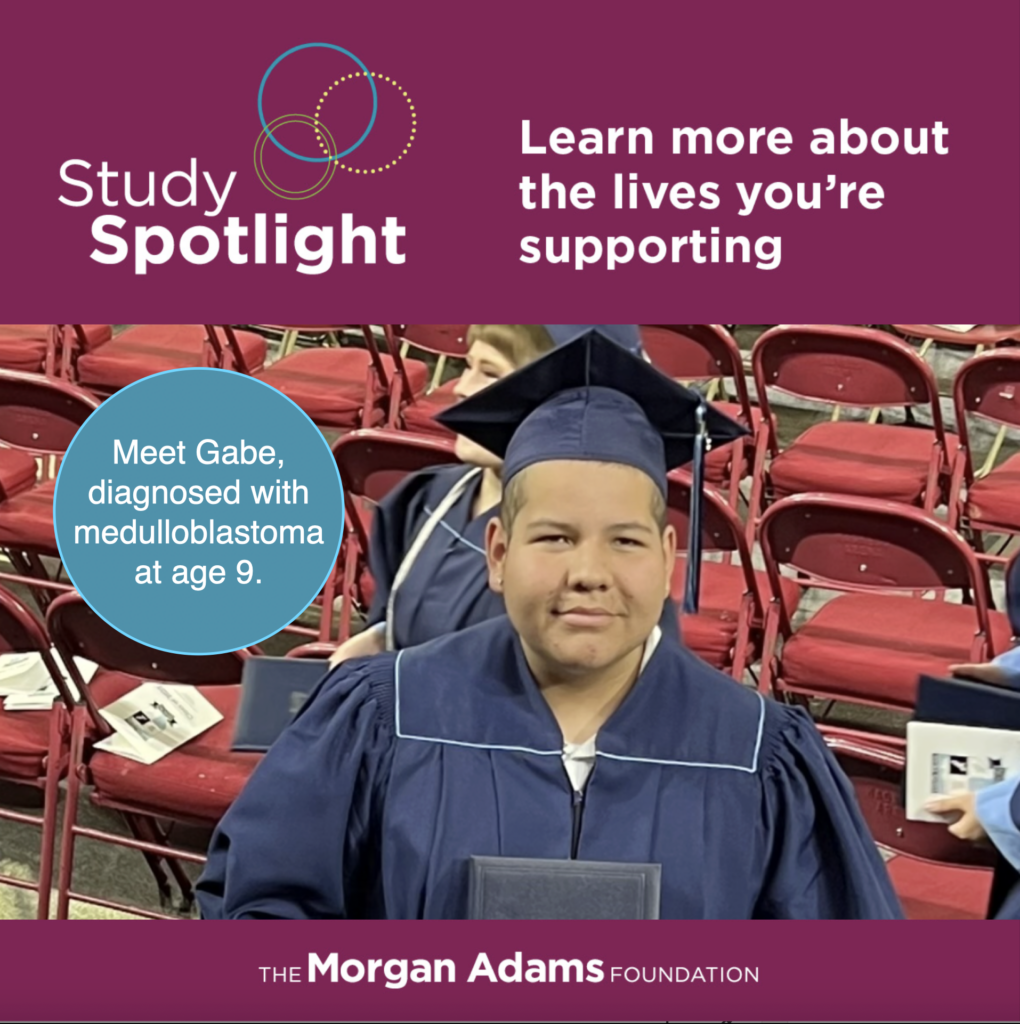
Meet Gabe
Age at diagnosis: 9 years old
Gabe today: Gabe graduated high school and is a thriving young man!
At nine years old, after months of headaches and countless doctors’ visits, Gabe was rushed to Children’s Hospital Colorado after a dramatic spell of dizziness and weakness.
There, a CT scan and MRI confirmed that Gabe had a brain tumor. He underwent an emergency craniotomy the next day where most of the tumor at the base of his brain was removed. The next day, a full diagnosis of Stage 4 Brain Cancer (Medulloblastoma) was received.
Gabe spent a month in the hospital before beginning his treatment which consisted of six weeks of daily radiation and six months of high dose chemotherapy. But since then – now 12 years later – Gabe’s scans have been clear, and he is cancer free.
In 2018, along with his family and The Morgan Adams Foundation, Gabe successfully lobbied to create the Colorado Childhood Cancer Awareness License Plate – with a portion of the proceeds benefitting MAF. He’s thrilled to see his vision become a reality, spreading awareness about the devastating disease and garnering new donations for MAF.
Want to learn more about the science behind this and other studies you’re helping to fund?