High-risk neuroblastoma is one of the toughest childhood cancers. It often strikes children under age five, spreads quickly, and is strongly linked to amplification of the MYCN gene — a powerful cancer “engine” that has long been considered untreatable.
Now, researchers funded by The Morgan Adams Foundation are pioneering a new approach: shutting down the machinery MYCN depends on.
About Neuroblastoma
Neuroblastoma is the third most common childhood cancer, typically diagnosed in children under the age of five. It begins in immature nerve cells and most often forms in the adrenal glands, but it can also develop in the chest, abdomen, or spine.
Each year, about 800 new cases are diagnosed in the United States. For children with high-risk neuroblastoma, treatment usually requires intensive chemotherapy, surgery, radiation, stem cell transplants, and immunotherapy. Despite this aggressive approach, survival rates remain poor, and many children relapse.
There are currently no targeted therapies approved for high-risk neuroblastoma. But with your support, researchers are closer than ever to changing that.
The Research
Scientists have identified CDK11 as an essential protein for neuroblastoma survival. Using a drug called OTS964, they’ve shown:
Potent tumor cell killing in the lab at very low doses
Dramatic reduction of MYCN levels
Early signs that tumor cells may be “reprogrammed” into normal nerve cells
Potential for stronger results when combined with chemotherapy and radiation
This work is advancing toward animal models to test safety and effectiveness, laying the foundation for future clinical trials.
Why this matters
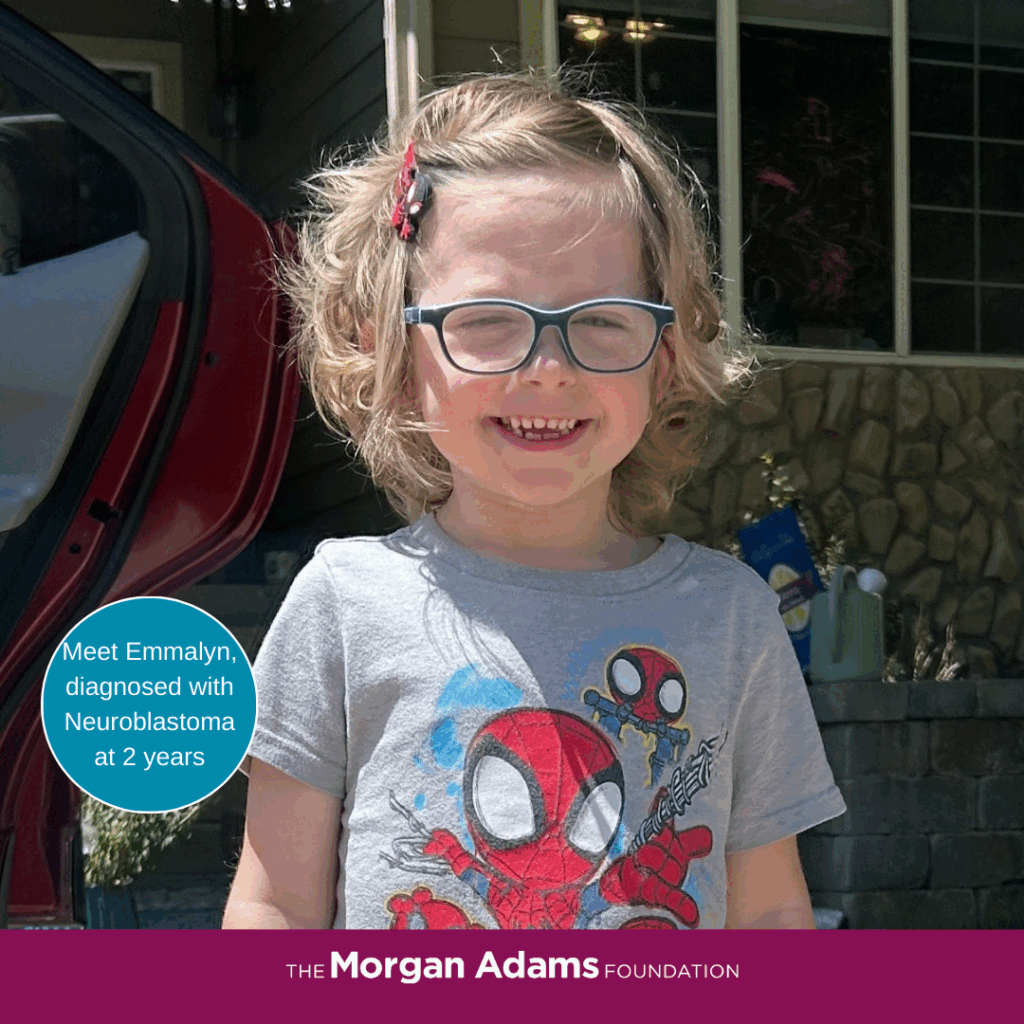
High-risk neuroblastoma remains one of the deadliest childhood cancers, and current treatments are intense, toxic, and often not enough. By targeting CDK11, researchers aim to shut down the very machinery that drives tumor growth, offering the potential for more effective, less harmful therapies. This work could change the future for children like Emmalyn, giving them a real chance to survive and thrive.
“Targeting CDK11 is like throwing a wrench in the gears MYCN needs to run. For the first time, we can shut down this super-engine of neuroblastoma."
Nathan Dahl, MD
Want to learn more about the science behind this and other studies you’re helping to fund?
In July 2023, just after her second birthday, Emmalyn’s world turned upside down. What started as a bloated tummy and a trip to Urgent Care quickly became every parent’s nightmare: doctors found a tumor, and a biopsy revealed high-risk metastatic neuroblastoma.
Since then, Emmalyn has endured more than most adults face in a lifetime — surgeries, ventilation, chemotherapy, fertility preservation, MIBG treatments, bone marrow transplants, radiation, and immunotherapy. Through it all, she has shown incredible resilience, meeting every challenge with the spirit of a fighter.
But even with today’s most aggressive treatments, high-risk neuroblastoma remains one of the hardest childhood cancers to cure. Research into new approaches, like targeting CDK11, gives hope that children like Emmalyn might one day face gentler, more effective therapies — and the chance to grow up cancer-free.
To support groundbreaking kids’ cancer research like this click here.
Want to learn more about the science behind this and other studies you’re helping to fund?